ODD-1
Microsonic Lab
Capture, transform and layer sound. Leave the laptop behind.
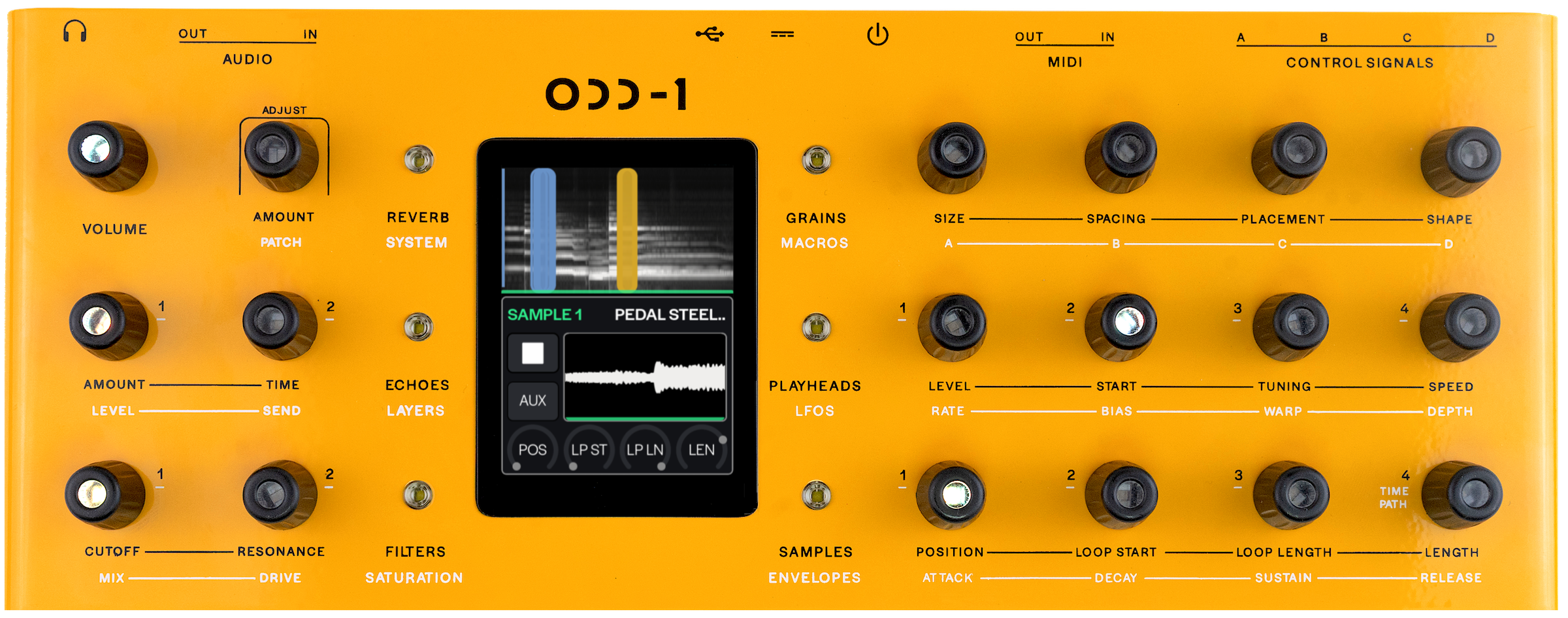
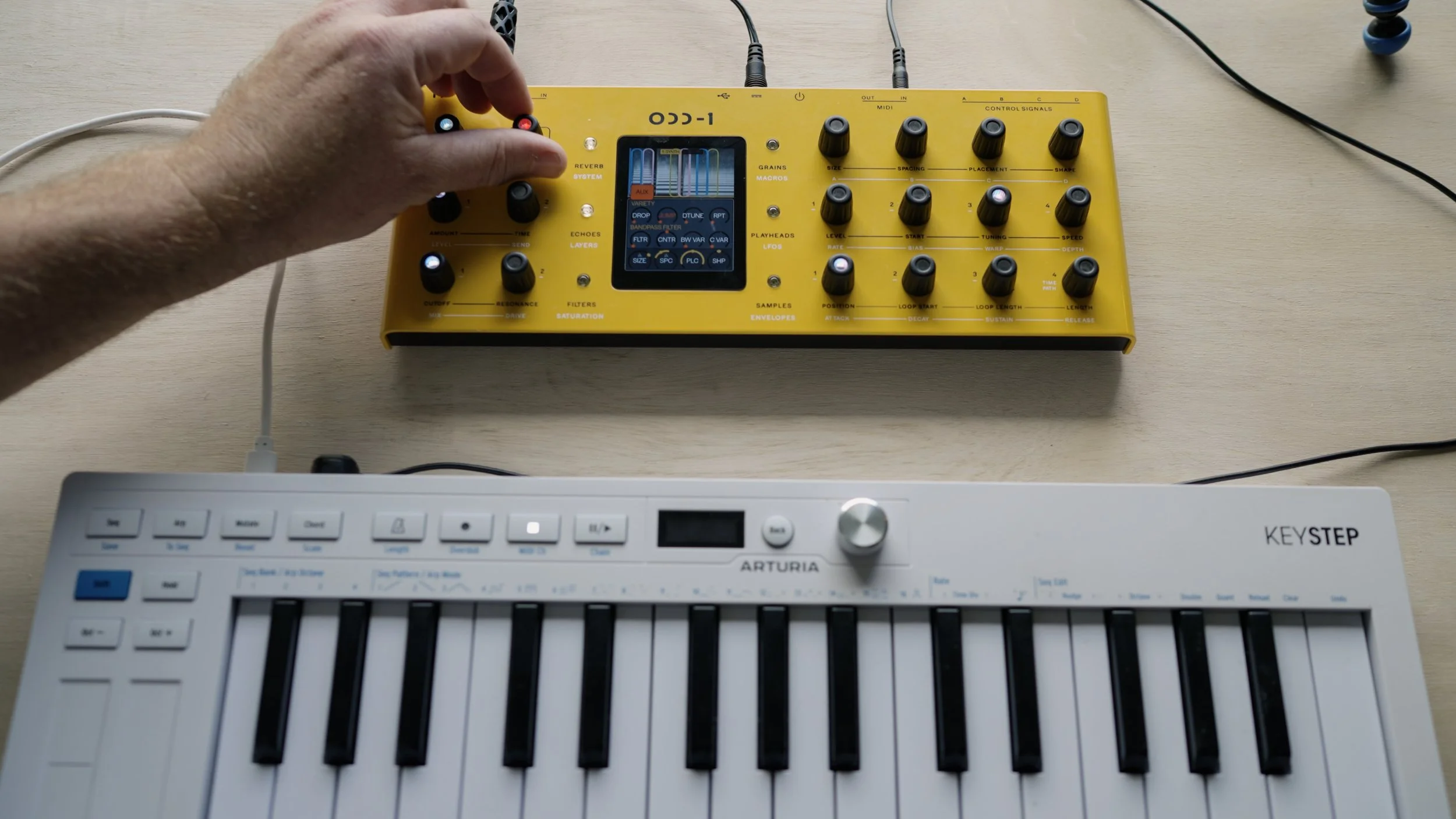
ODD-1 is a laboratory for sound synthesis, or a playground, depending on your mood. Developed around an entirely new microsonic synthesis engine, it is organized in rows like a rack-mounted modular synthesizer, and is designed for you to get patching and experimenting right out of the box. With three performance modes — SYNTH, LIVE and LOOPS — ODD-1 is as versatile as an instrument gets.
SHIPPING NOW!
FREE SHIPPING WORLDWIDE!
PRICE EXCLUDES VAT - EU/UK customers will see 20% charge under “shipping and handling” - this is VAT and will be remitted to the EU/UK.
$999
Shipping now · Free shipping · 2-year warranty · Includes ODD-1V Plug-In
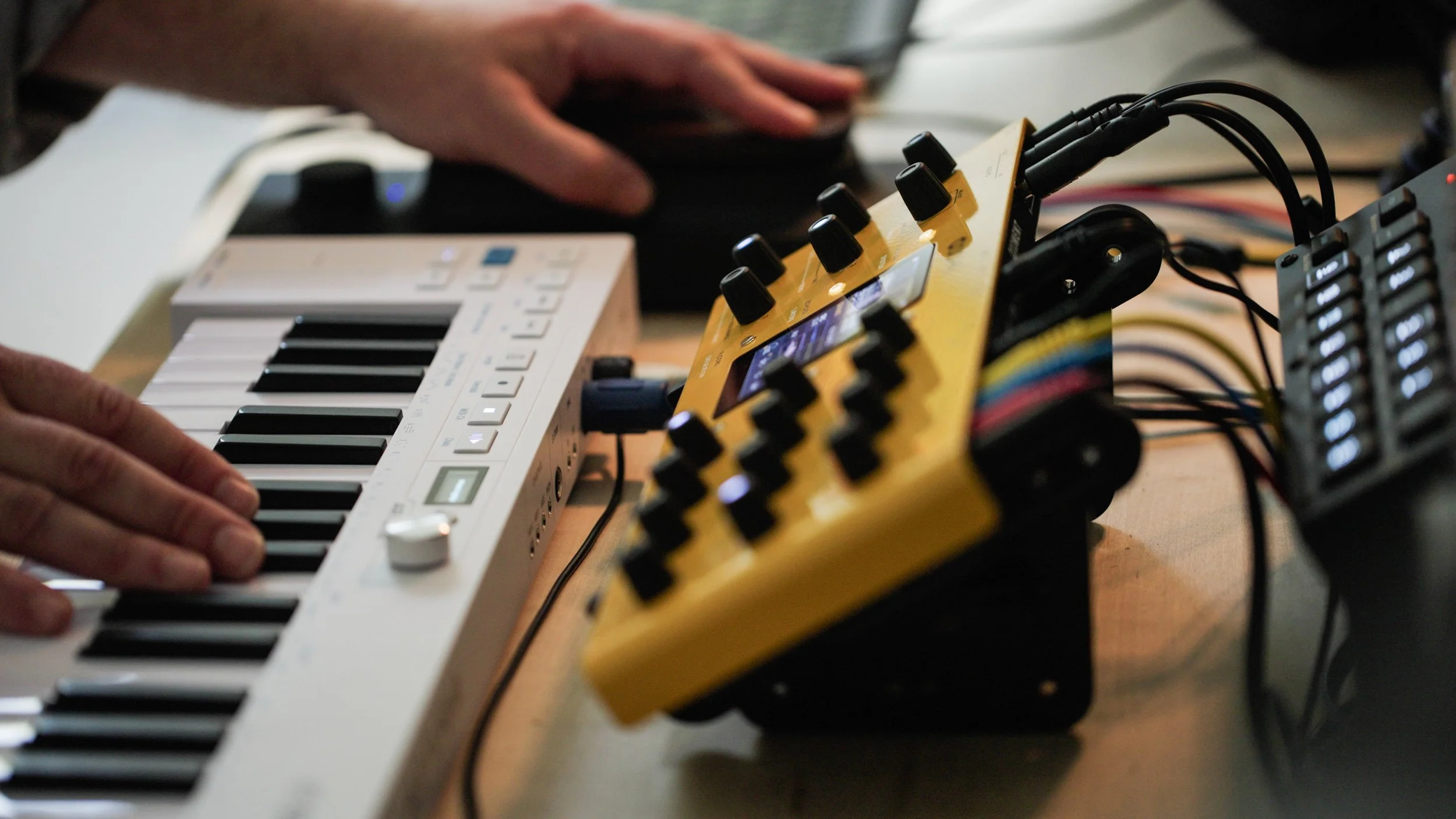
SYNTH
Build sounds from your own samples. Eight voices, two layers.
LIVE
Transform and perform with audio input in real time.
LOOPS
Capture hands-free, then modify and sync independent loops.
Sample anything through the input, or start from two GB of original sounds created for ODD-1
Stack or trigger up to eight samples and shape them with filters, saturation, echo and reverb
Use four playheads per layer — each with its own speed, pitch and TIME PATH — to scrub, freeze or reverse them as a note plays
With two independent layers — play a synth on one while the other loops or processes what you play
Hold any knob and press a source to modulate it — no menus, no lists
Take your patches into your DAW — ODD-1V is included, a $199 value
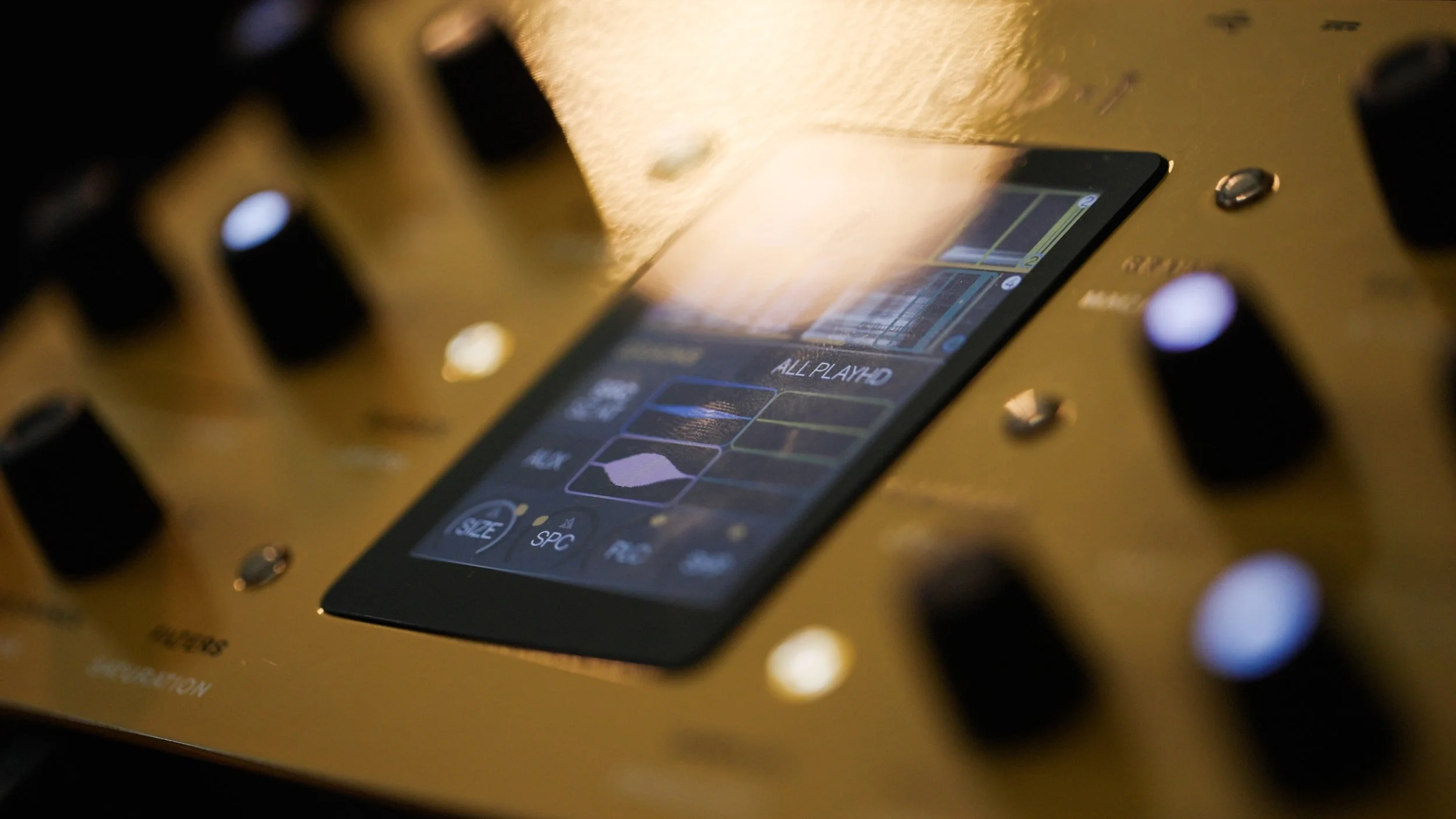
When ODD-1 is powered up you’ll see a spectrogram representation. Play a note, and the visuals show how pieces of the sample — grains — are created by playheads moving across the sound, each playhead in a different color.
ODD-1's TIME PATH gives each stage of a note its own playback speed. A stage can play forward, reverse, or freeze. This allows an indefinitely-sustained note to retain the character of its source.
Four playheads can follow four different paths through one sample, or manipulate four different samples simultaneously.
Play With Time
SPACING controls the interval between grain starts. At the mid point grains overlap just enough for smooth playback, and as you turn spacing up, the gap becomes larger than the grain’s length, leaving silence between grains.
At spacing 0, ODD-1 matches the grain timing to the played note's pitch period. With playback speed also set to zero and the grain sufficiently short, this behaves like a wavetable oscillator.
The result is an instrument that can move between recognizable source material, playable tones, intricate rhythms, and evolving granular textures.
From Oscillations to Textures
Frequency-Selective Grains and Immersive Sound
Every grain has a time window and a frequency-selective band-pass filter. Unlike a conventional fixed-bandwidth filter, its bandwidth increases with its center frequency, following a relationship inspired by how we hear. This gives each grain an additional dimension of selectivity, allowing different frequency regions of a sample to contribute independently to the resulting sound.
The PLACEMENT controls the left-to-right position in the stereo field, but it isn’t panning. It applies a binaural filter designed to mimic aspects of the way the head and ears shape incoming sound. Oddment's proprietary processing creates spatial cues that can give sounds a greater sense of depth over headphones, while still providing a great experience over speakers.
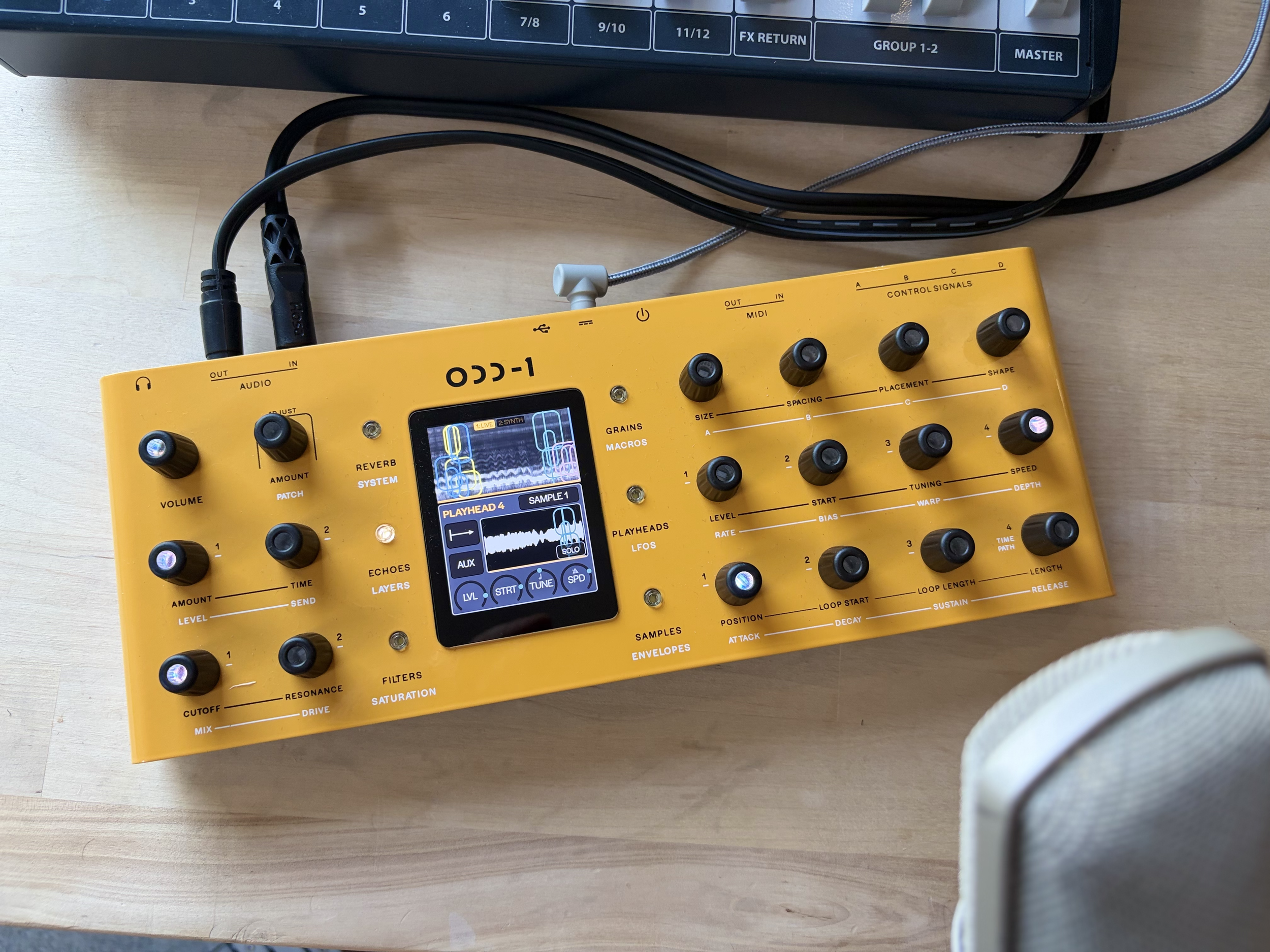
The ODD-1 has two LAYERS. Each layer has four samples and four playheads, two multimode filters per voice, two saturation units for distortion, bit crushing, and compression, two echoes, and a complete set of modulation sources. These include LFOs, envelopes, macros, control signal inputs, an X-Y pad on the touchscreen, and MIDI modulation, including CC learning and MPE support.
The layers can process in series or in parallel. One layer can capture or process the other's output, allowing the layers to function as independent instruments or as interconnected stages of a larger sound-processing system.
Patching is designed to be immediate. Hold the parameter you want to modulate, and the available modulation sources light up. Press or turn a source to make the connection; hold any knob to exit.
A Modular Rack, or Two
Three Instruments in One
SYNTH combines captured or loaded samples into complex, multi-timbral sounds, with independent playheads and granular processing.
LIVE turns incoming audio into a playable instrument. A 60-second rolling buffer captures the input, which can be played polyphonically across eight voices. Sing into a microphone and play chords from your own voice, or freeze and reshape other incoming sounds.
LOOPS records each loop into its own buffer. Up to four loops per layer can have independent lengths, playback speeds, and tuning while remaining synchronized to a common tempo or the first loop. The result ranges from tightly locked rhythms to shifting patterns and polyrhythms.
Hardware, Connections, and Storage
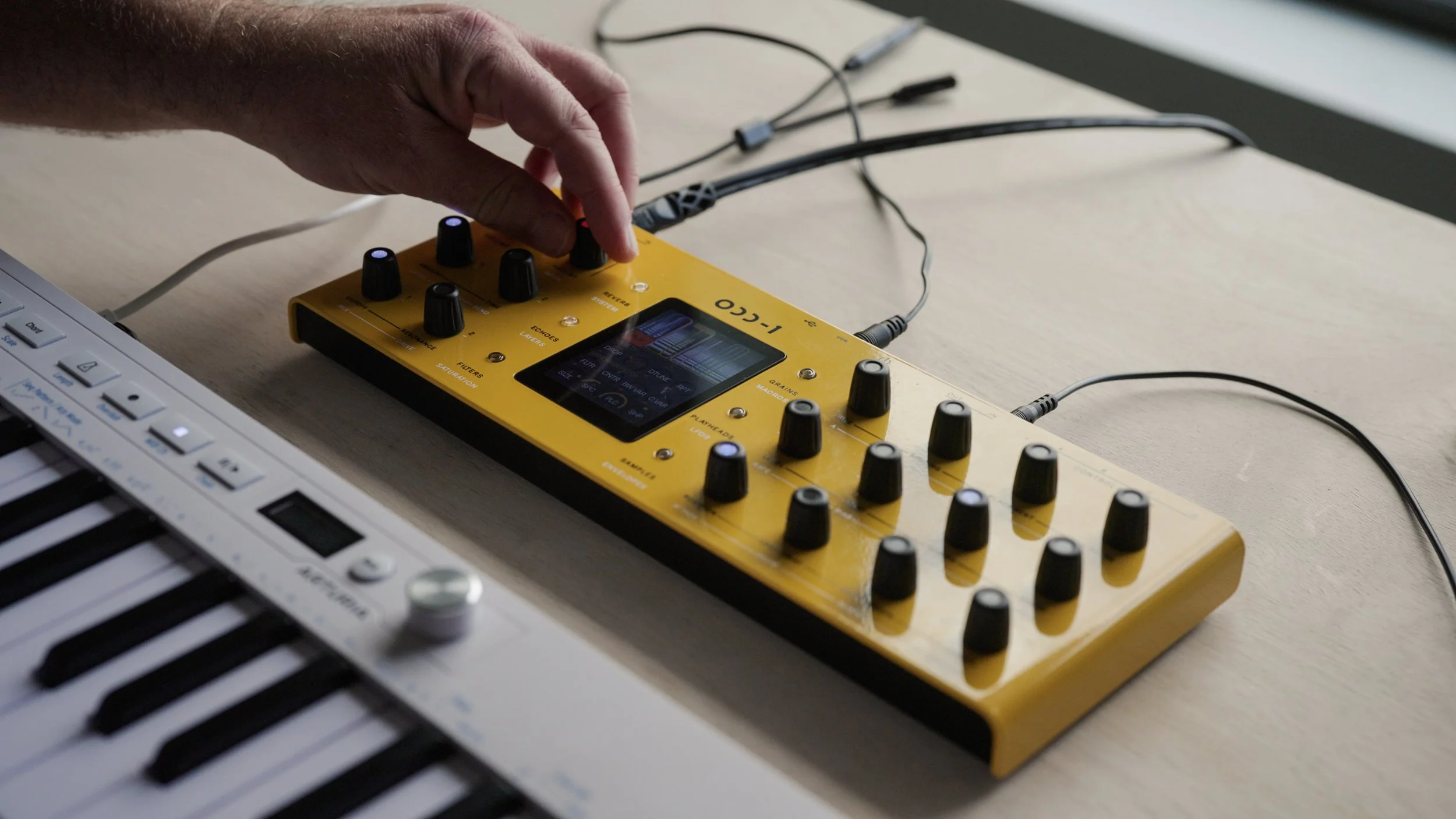
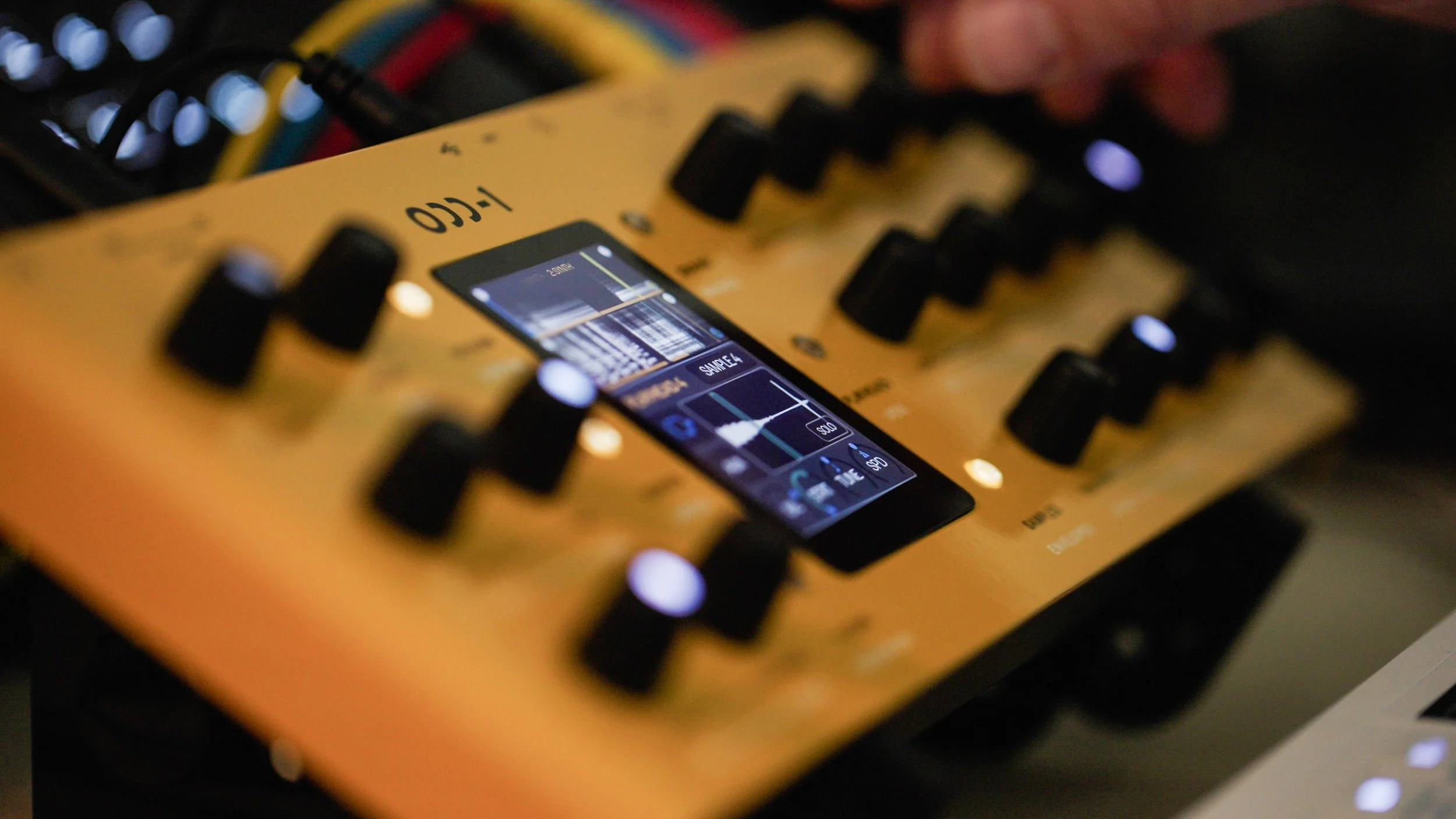
ODD-1 is housed in an aluminum enclosure and controlled by a 2.8-inch color touchscreen and rows of function-specific infinite encoders, each with an integrated push button and LED.
It captures mono or stereo audio at 48 kHz from the line input, the microphone input on the headphone jack, or USB audio. Four control inputs (A–D) accept 0–5 V signals from expression pedals, sustain pedals, or CV. The TRS MIDI input supports Type A and Type B wiring, selectable in software.
The instrument includes a 2 GB artist-made sample library and several additional gigabytes of user storage shared with the plug-in. It connects to a computer as a USB drive for sample, patch, and firmware transfers.
Connectivity
-
3.5mm headphone
3.5mm stereo line input and output
Multi-channel USB-C input and output
-
3.5mm TRS input and output
USB-C input and output
-
4 control signal inputs
Configurable for sustain and expression pedals, foot switches, 0-5v CV and gate
-
12V DC power barrel
Compute, Storage, Support
-
3+ GB of user storage
2 GB factory sample library
1 GB of RAM
-
4-core ARM A72 with NEON
64-bit math when needed
32-bit audio
-
Transfer and use audio samples in .wav, .flac, .mp3 (.aif coming soon)
Mono or stereo samples
Flexible sample rates (44.1, 48 or 96 kHz recommended)
Capture new mono or stereo samples at 48 kHz
Sound Synthesis, Modular Processing
-
Scrub forward, backwards, freeze or any combination with our vari-speed Time Path
4 independent playheads for harmonies, repetitions, or any wild thing you can imagine
Binaural spatialization of each grain
Auditory-inspired filter for each grain
-
3 Envelopes
1 Vari-Speed Time Path
4 LFOs
4 Macros
4 Control Inputs
MIDI Key Number, Velocity, Pitch Bend, Mod Wheel, Aftertouch, CC Learning
-
Every parameter can be held and becomes a modulation destination
-
2 polyphonic layers, each with a 60-s stereo sample buffer.
Fully independent parameters and mod matrix per layer.
2 echo units per layer.
8 or more voices total, split across layers. Total number depends on parameter settings.
2 filters per voice (LP, HP, BP, BR)
2 non-linear saturators per voice (distortion, bit crush, compression)